Use long parking stays
Turn workplace, hotel and overnight parking into charging time.

AC charging
7 kW solutions for workplaces, hotels, residential sites and parking facilities where time enables lower grid impact.
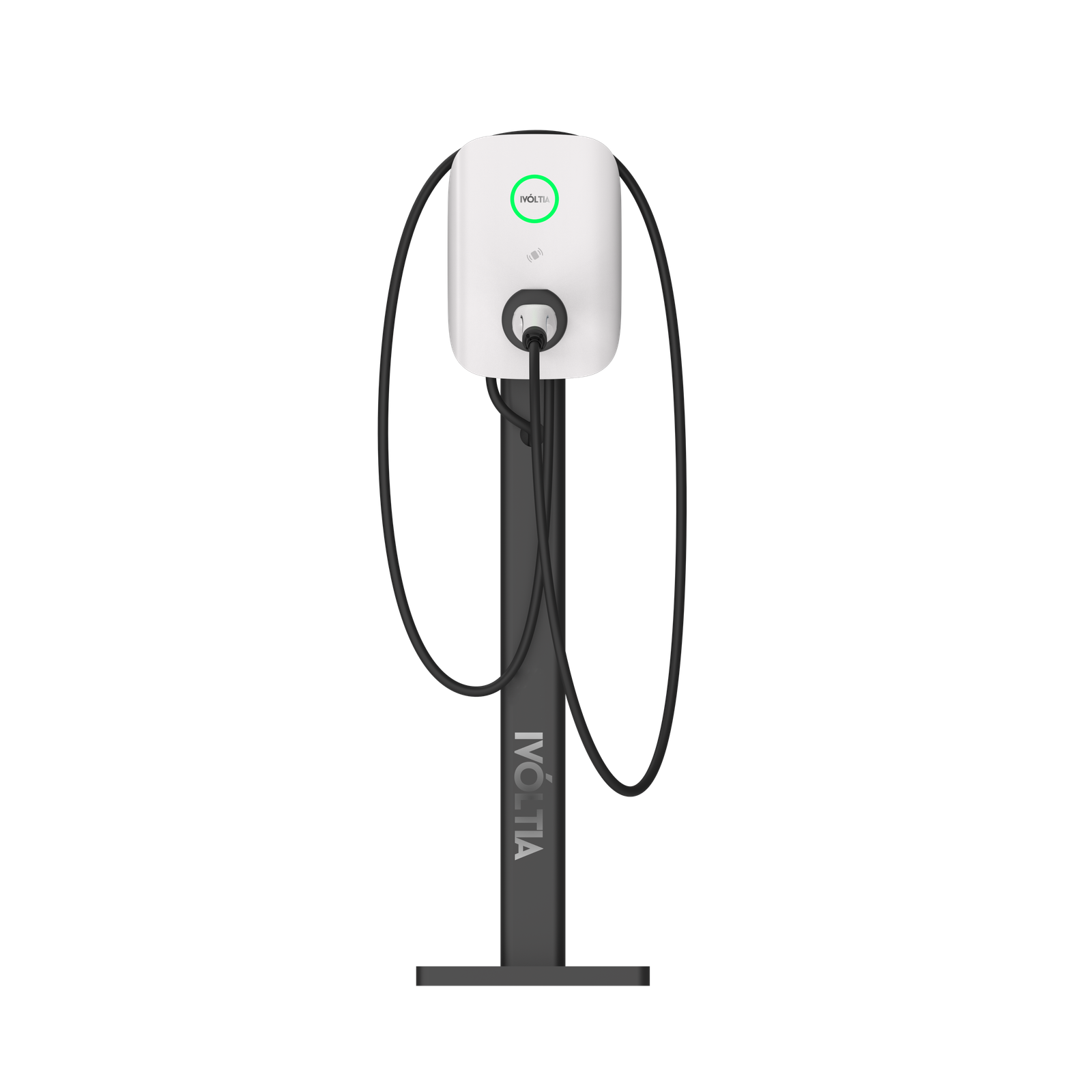
PRODUCT IN CONTEXT
Destination AC charging turns parked hours into energy for workplaces, hotels and residential communities.
Place charging where dwell time is predictable.
Set an electrical limit across active bays.
Define user access and records by site.
PRODUCT FACTS
Compare the numbers that affect vehicle fit, site design and operations.
| Parameter | Portfolio reference |
|---|---|
| Rated power | 7 kW |
| Input / output | AC 230 V ±10% / 32 A |
| Charging connection | Dedicated AC charging equipment |
| Start options (by configuration) | App / Bluetooth / RFID card / plug-in auto-start |
| Metering | MID meter |
| Protection | IP54 / IK10 |
| Connector options | GB/T / Type 1 / Type 2 |
| Communication | OCPP 1.6J |
| Installation | Wall / floor |
Reference portfolio values. Exact model, connector, market certification and optional features must be confirmed in the project quotation. Rated power is not a per-connector simultaneous output guarantee.
WHY THIS FAMILY
Turn workplace, hotel and overnight parking into charging time.
Deploy 7 kW wallboxes in phases as demand grows.
Pair charging access with the site-management experience.
CONFIGURATION OPTIONS
The site must confirm that parking time is long enough to deliver the required energy.
| Application | Configuration | Selection rationale |
|---|---|---|
| Home: overnight | One dedicated wallbox | Daily energy can be restored during normal parking. |
| Workplace: 6–9 hours | Multiple units with load sharing | A common power cap serves employees across the day. |
| Hotel: overnight guests | Guest access and session records | Charging becomes part of the stay without high peak power. |
| Residential community | Networked multi-user system | Access, records and phased expansion support shared parking. |
INSTALLATION & VALIDATION
Daily distance, arrival state and parking duration.
Immediate demand, adoption forecast and accessibility.
Available capacity after normal building load.
Private, employee, guest, resident or public access.
Conduits, panels, communications and reserved spaces.
YOUR QUESTIONS, ANSWERED
Practical answers about AC destination charging. No guesswork.
Ask about your project10 questions
Depending on the selected configuration, drivers can start with the app, Bluetooth, an RFID card or automatic start after plugging in. The project specification identifies the enabled options.
A simple estimate is power multiplied by charging hours, then reduced for losses and vehicle limits. The exact result depends on the vehicle and installation.
Not when dynamic load management is configured. Active sessions can share a defined site limit.
It enables standardized communication with a management platform, but every charger-platform combination and required function should be validated.
Yes where supported by the platform and local rules, using user accounts, tariffs and session records.
The answer depends on configuration; Ethernet, cellular or local networking may be considered, with a plan for outages.
Destination AC charging works best when drivers park for several hours. For short visits, DC fast charging can deliver more energy before the vehicle leaves.
Specify the required user groups and authorization methods. Confirm which functions are in the charger and which depend on the backend, then test both user journeys.
Follow the selected equipment manual. Include visible cable and connector condition, access to the bay, warning indicators and escalation procedures; electrical maintenance belongs to qualified personnel.
Check the location of charging ports on representative vehicles, cable routing and pedestrian paths. A charger that fits on a wall may still be awkward to use from the intended bay.
No matching question. Try another word or contact our team.
YOUR NEXT PROJECT
Your vehicles. Your site. Your operating goals. Start a conversation around the system you actually need.