Customer journey
Plan signage, access, session start, pricing, payment and customer support as one journey.

Commercial charging
AC and DC systems for retail, hotels, offices, parking facilities and public networks.
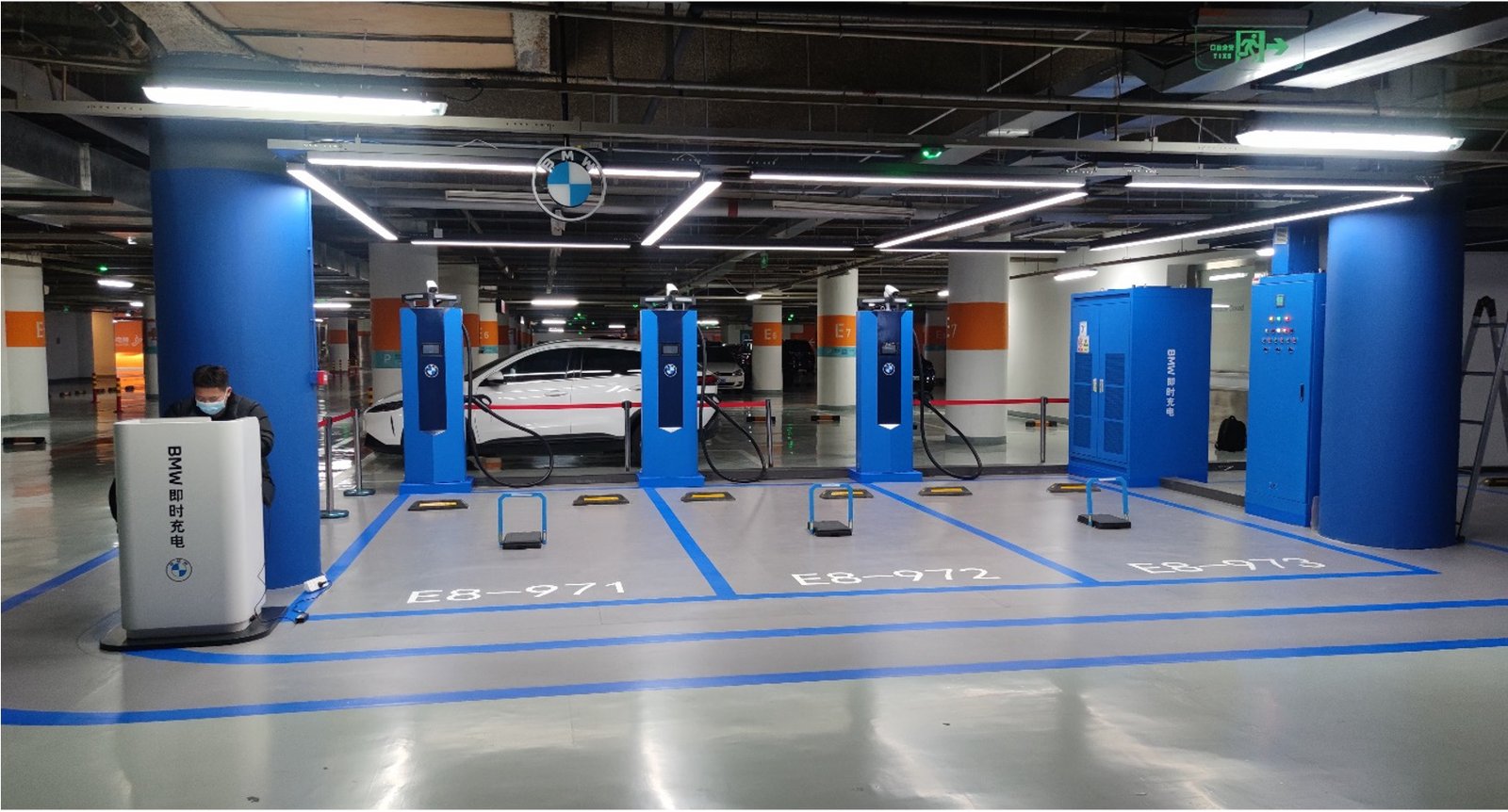 Commercial charging site photo
Plan signage, access, session start, pricing, payment and customer support as one journey.
Choose AC/DC mix by dwell time and model sessions, tariffs and operating costs.
Review charger availability, faults, energy and commercial data across the network.
YOUR OPERATING GOALS
Commercial charging must fit the visit: how long drivers stay, how they authenticate, what they pay, where they wait and who resolves a failed session.
AC supports long visits; DC supports turnover; mixed sites can use both.
Clear wayfinding, access and session status reduce support calls.
Define users, tariffs, billing exports, availability and multi-site reporting.
Dynamic limits coordinate charging with the rest of the building load.
CONFIGURATION OPTIONS
A hotel, supermarket and highway stop should not use the same charging mix. Dwell time and desired turnover lead the decision.
| Application | Configuration | Selection rationale |
|---|---|---|
| Office or hotel: 4–10 hours | 7 kW AC, multiple bays, load sharing | Vehicles can recover energy gradually during the stay. |
| Retail: 45–120 minutes | 20–40 kW DC plus selected AC bays | Useful range is added without designing for highway-speed turnover. |
| Public urban hub: 20–60 minutes | 60–120 kW DC with power sharing | Balances throughput, connection size and mixed vehicle capability. |
| Corridor or high-demand hub | 120–240 kW or distributed high power | Supports shorter sessions and future bay expansion. |
FROM DESIGN TO HANDOVER
Guests, employees, tenants, public drivers or a controlled membership group.
Expected sessions, energy per visit, busy hours and acceptable waiting.
Traffic flow, accessible bays, signage, lighting, protection and connectivity.
Authorization, pricing, support, reporting and responsibilities.
Commission, monitor utilization and adapt tariffs or power as demand grows.
YOUR QUESTIONS, ANSWERED
Practical answers about Commercial charging. No guesswork.
Ask about your project9 questions
The main factor is how long customers park. Hotels and workplaces suit destination AC chargers; retail and high-turnover sites may benefit from DC fast or ultra-fast charging. We can recommend a mix around the vehicles and site power.
Access methods depend on the chosen configuration and local requirements. Options can include RFID, app, account-based access or payment integrations.
The model may consider energy, time, parking, membership and local regulation. It should also discourage bays remaining occupied after charging.
Yes. Multi-site operation can centralize station status, sessions, energy, users and alarms.
A dynamic site limit can reduce charging temporarily and restore power when other loads fall.
Remote diagnostics, clear support ownership, spare-parts planning and a maintainable layout reduce recovery time.
No. Utilization, electricity tariffs, rent, payment fees, maintenance and capital costs determine the result. Model several utilization scenarios before committing to the site.
Define the operator, payment provider and support responsibilities in the delivery scope. Test interrupted and failed sessions as well as successful payments before opening.
Start with arrival patterns, expected EV users and dwell time. Model peak occupancy and consider phased equipment installation with conduits prepared for future bays.
No matching question. Try another word or contact our team.
YOUR NEXT PROJECT
Your vehicles. Your site. Your operating goals. Start a conversation around the system you actually need.